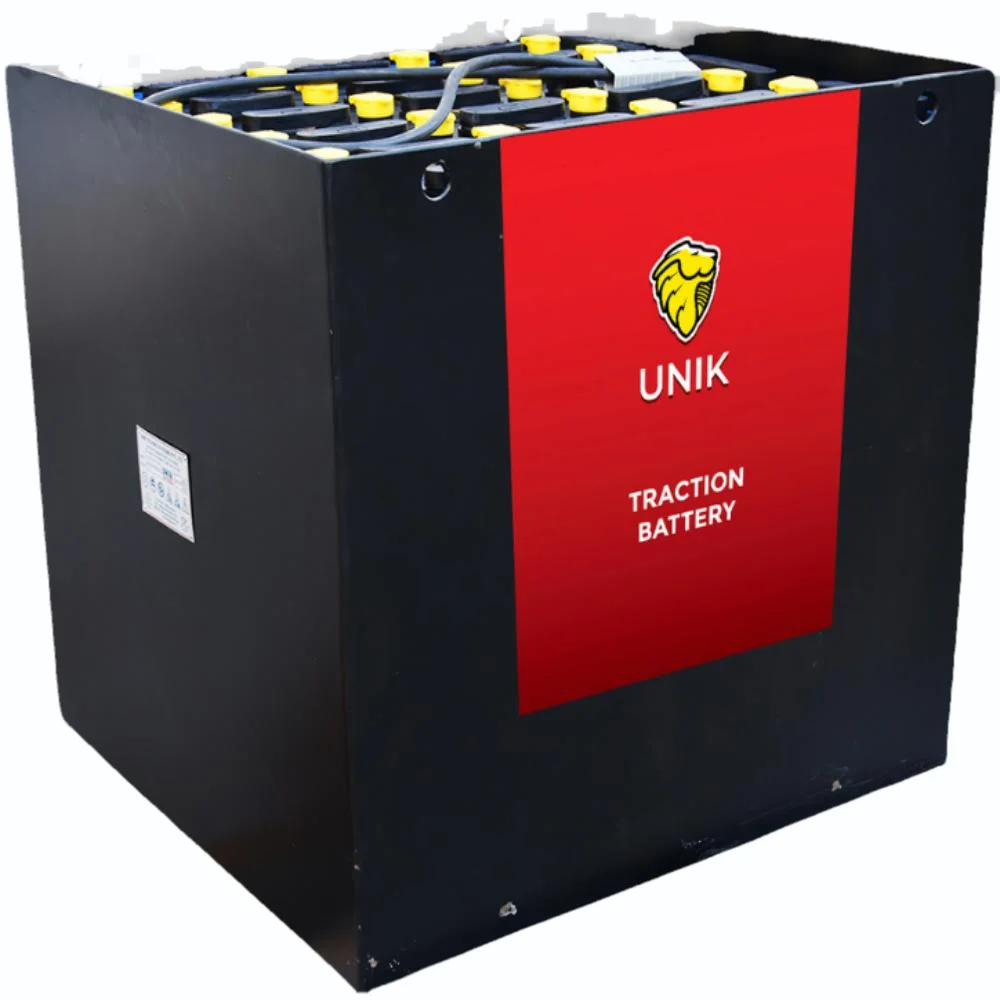
A traction battery is specified by capacity and voltage, and both numbers are easy to look up. What is harder to look up is the thing that actually determines whether the fleet runs: the relationship between shift length, charge window and available batteries.
Start from ampere-hours consumed per shift
The honest starting point is measured consumption, not nameplate capacity. If the truck has a battery monitor, export a week of data. If it does not, log the specific gravity before and after a shift for a few days, or track the energy put back at charge.
Consumption per shift depends on load weight, lift height, travel distance, ramp gradients and operator habit. Two trucks in the same aisle can differ by 20% because one operator lifts earlier.
Then count the charge windows
This is where fleets get into trouble. A battery that is generously sized for one shift becomes marginal if the operation runs three shifts and only one opportunity charge is available.
| Operation | Typical approach | Watch out for |
|---|---|---|
| Single shift, 8 h | One battery, overnight charge | Sulphation if left discharged over a weekend |
| Two shifts | Opportunity charging during breaks | Heat build-up; needs a charger with a proper profile |
| Three shifts | Two batteries per truck, swap at shift change | Swap handling and charging bay space |
| Seasonal peaks | Spare battery pool | Idle batteries need a maintenance charge |
Why opportunity charging is not free
Opportunity charging extends the working day of a battery, but every charge is a partial cycle and every partial cycle generates heat. A battery that is repeatedly topped up during breaks without ever completing a full cycle will stratify its electrolyte and will not get the equalisation charge it needs.
The practical answer is a scheduled full charge once a week, and a charger that actually implements the profile it claims to. Many fleet problems that look like a failing battery are a charger that never reaches the finishing stage.
If you are replacing batteries more often than you expected, measure the charger before you blame the battery.
The water you do not add
Water consumption is the cheapest diagnostic in the plant. A cell that drinks water faster than its neighbours is running hot or is being overcharged. A battery that drinks nothing at all is probably not being charged properly. Either way you learn something in thirty seconds.
When to change the specification
If measured consumption per shift is above about 60% of nameplate capacity, the battery is working hard and you should expect a shorter service life. That is the point to look at a larger capacity, a second battery, or a change in the charge regime — not the point to buy a different brand and hope.