Company
Battery Plate Pasting Machine
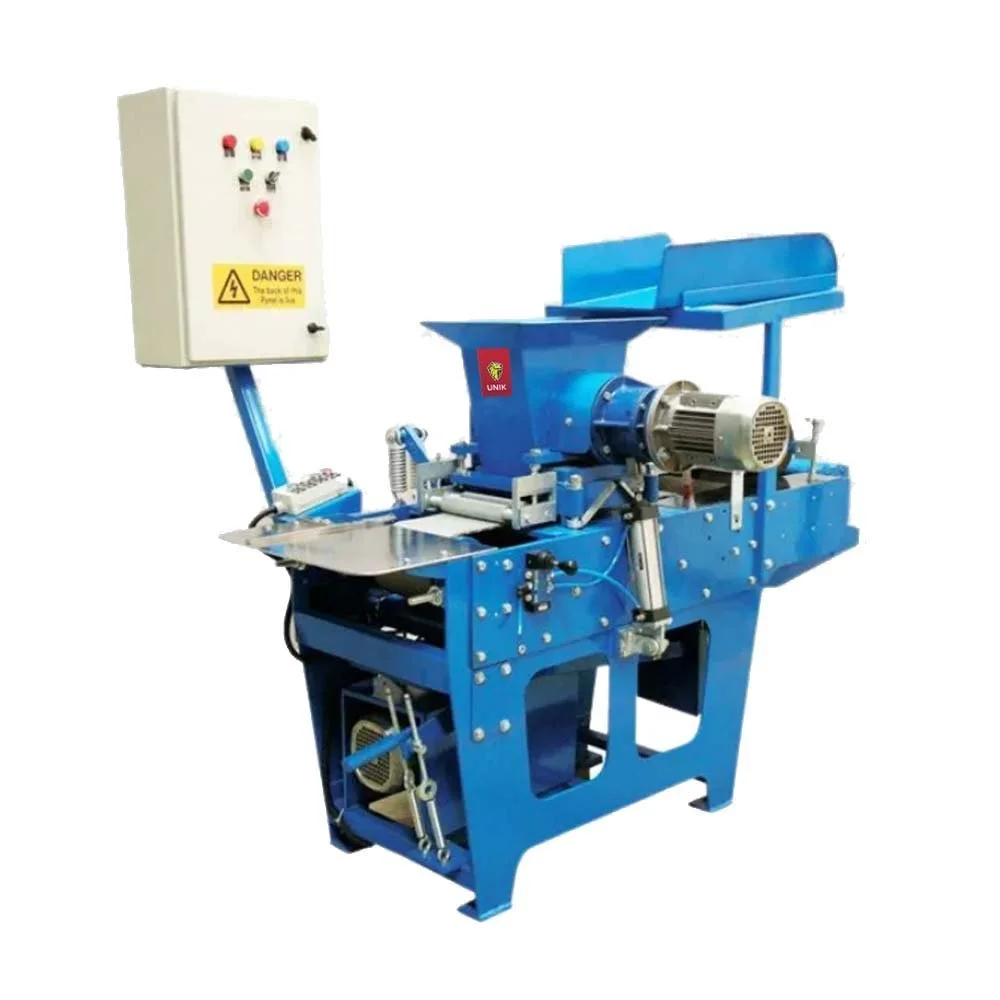
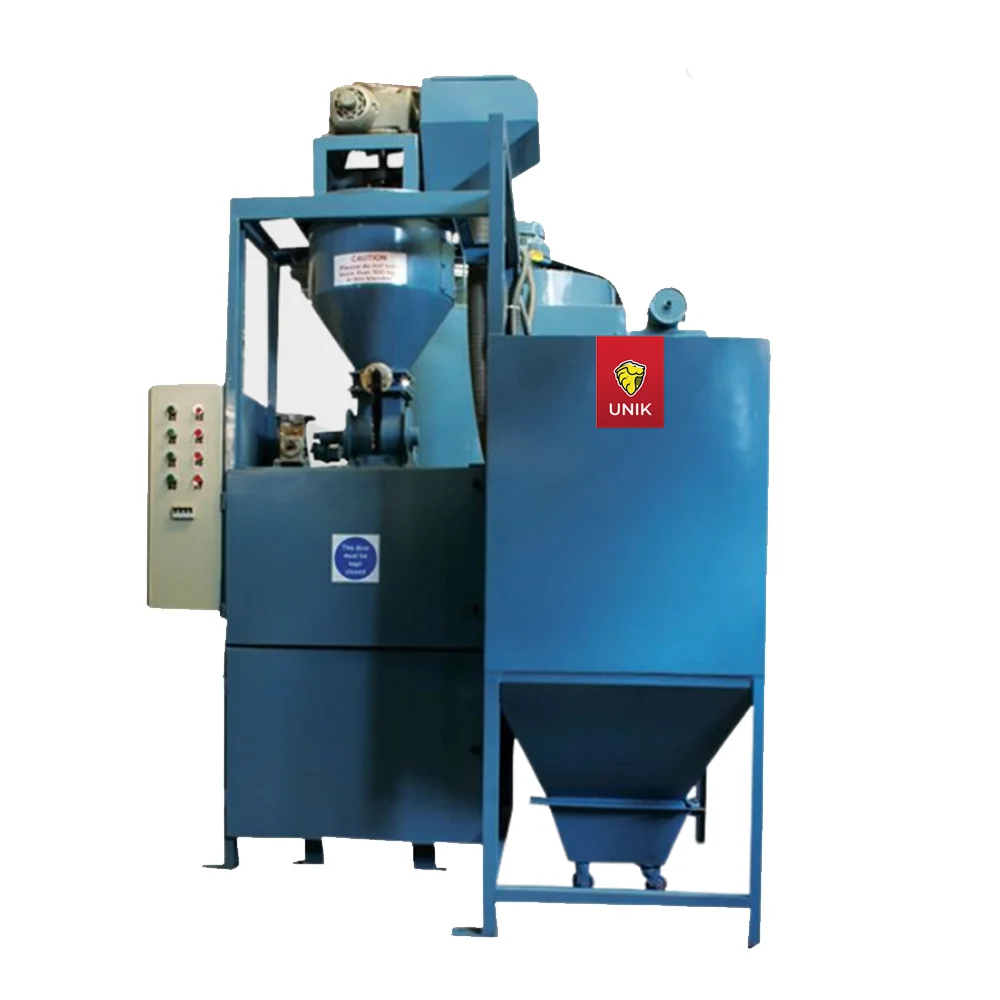
A pasting machine presses lead-oxide paste into both faces of a cast grid, trims the plate to weight and hands it to a flash-drying oven — the step that sets both capacity and scrap rate.
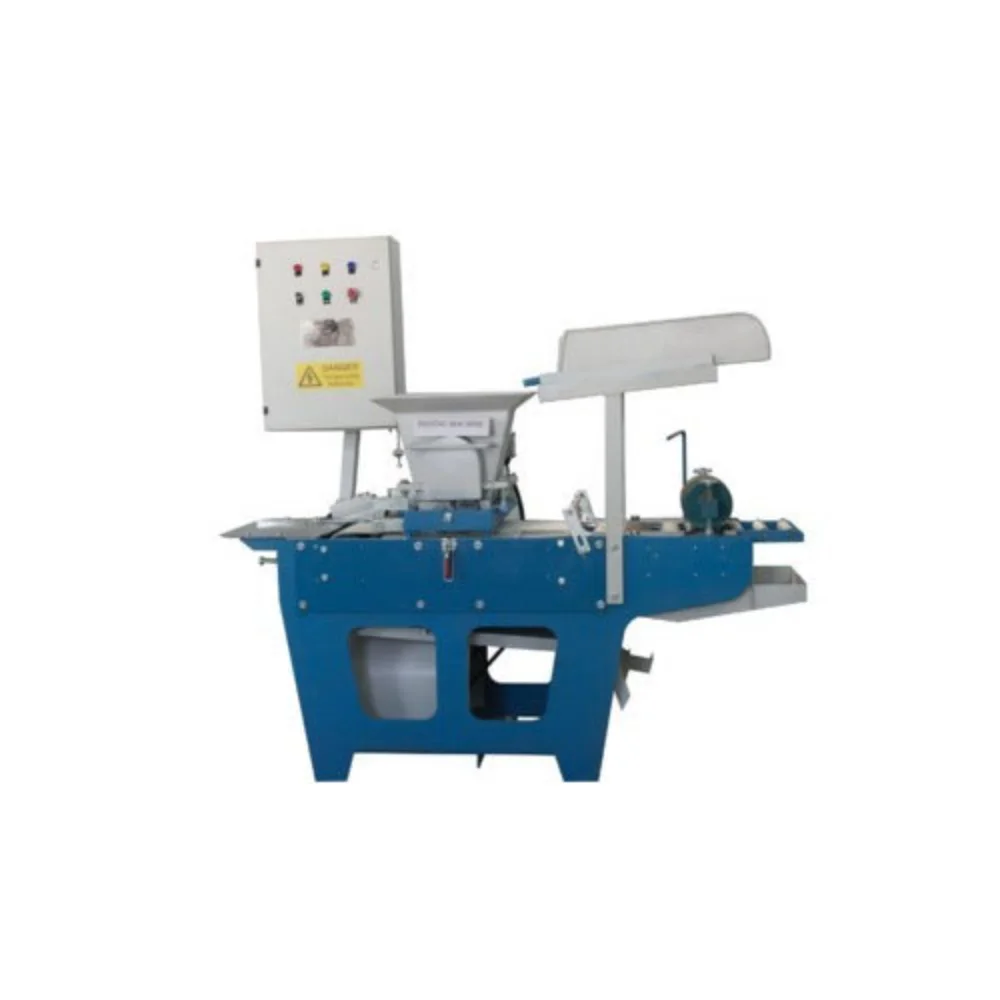
In short: a battery plate pasting machine applies lead-oxide paste to both faces of a cast grid and holds plate weight inside a set tolerance. Unik Techno Systems builds semi-automatic and automatic twin-roller pasting lines for plates from 100 × 80 mm to 320 × 220 mm, with the flash-drying oven and take-off conveyor matched to the same line speed.
How the pasting step works
Grids are stacked in a magazine and fed one at a time onto the pasting drum. Paste — lead oxide, water, sulphuric acid and a fibre binder mixed to a measured density — is pressed into the mesh from both sides by counter-rotating rollers, while side trowels and a doctor blade set the finished thickness. Plate weight is sampled against the target: a plate that runs light loses capacity, a plate that runs heavy cracks in curing.
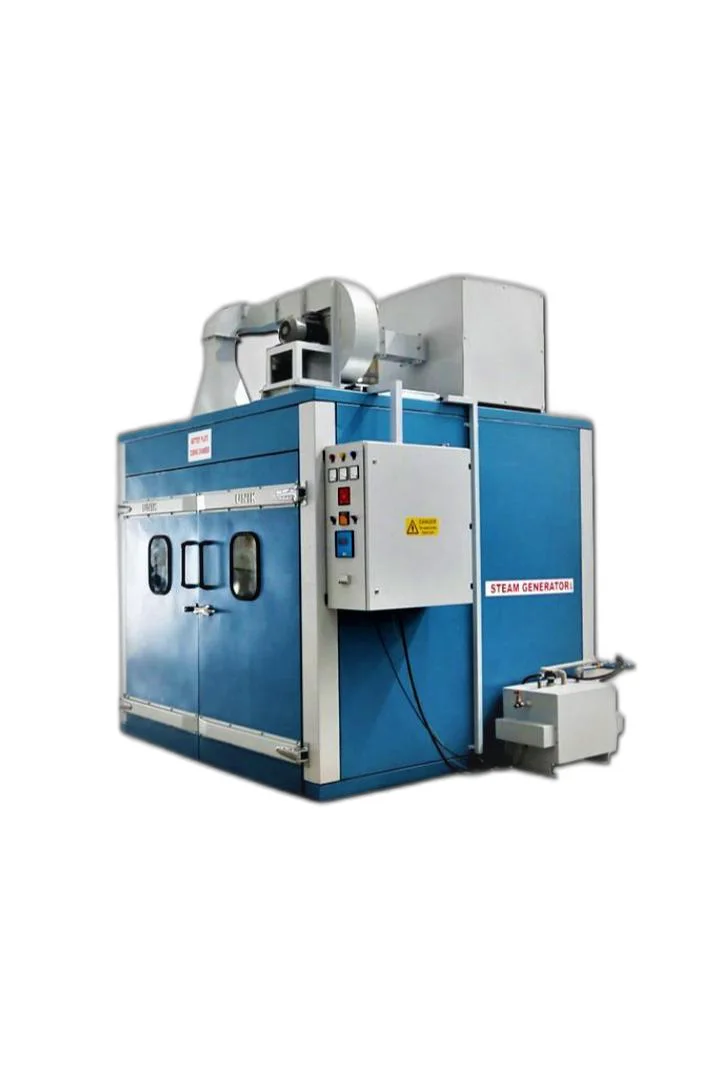
The pasted plate then passes under a flash-drying oven that skins the paste so it can be stacked and racked without shedding material at the edges. Belt speed, oven temperature and take-off height are set together, which is why we build the paster, oven and conveyor as one line rather than three machines that meet for the first time on site.
Specifications
| Parameter | Semi-automatic | Automatic |
|---|---|---|
| Grid size | 100×80 – 300×200 mm | 100×80 – 320×220 mm |
| Pasting | Single or double sided | Double sided, both faces |
| Plate thickness | 1.2 – 4.5 mm | 1.2 – 4.5 mm |
| Output | 6 – 12 plates/min | 15 – 30 plates/min |
| Plate weight tolerance | ±2 % | ±1.5 % |
| Paste density | 4.10 – 4.40 g/cm³ | 4.10 – 4.40 g/cm³ |
| Connected load | 2 – 3 kW, 415 V 3-phase | 4 – 7 kW, 415 V 3-phase |
| Air | 6 bar dry, 4 – 6 CFM | 6 bar dry, 4 – 6 CFM |
Where it sits in the plate line
The paster feeds straight into curing chambers. Lugs are cleaned on a lug brushing machine before casting-on-strap, and tubular plates go through a plate filling machine instead of a paster. Scoping a complete line? Start from the battery making plant page — the machine list there is built backwards from your target throughput.
Questions buyers ask
Frequently asked questions
What is the difference between a pasting machine and a pasting line?
A pasting machine is the paster itself: grid feed, paste hopper, rollers and thickness control. A pasting line adds the paste mixer, flash-drying oven, cooling conveyor and plate stacker, all speed-matched. Buying the paster alone usually means the oven and conveyor are sized later, and the line then runs below its rated output.
What plate sizes and thicknesses can you run?
Standard builds cover grids from 100 × 80 mm to 320 × 220 mm and finished plates from about 1.2 mm to 4.5 mm thick, set by the roller gap and trowels. Send the grid drawing and target plate weight and we confirm the roller and drum set with the quotation.
Why does plate weight tolerance matter so much?
Plate weight sets active material per plate, so it sets capacity directly. Plates that run more than about ±3 % off target either fail capacity test or crack during curing because the paste layer is uneven. Closed-loop weight feedback on the automatic build holds ±1.5 %.
What utilities does the machine need?
A 415 V three-phase supply, dry air at 6 bar, and extraction at the paste hopper and oven discharge. A typical automatic paster draws 4–7 kW; the oven is a separate load and is usually the larger of the two.
Still unresolved? Send the plate drawing or the load profile and we will answer with numbers rather than a brochure. Request a quotation →
Next step
Tell us the cells you need to build,
and the plant you need to run them.
Send your capacity target, cell format and the operations you want to bring in-house. We will come back with a machine list, a layout and an indicative timeline.
What helps us quote fast
- Cell format and dimensions (cylindrical, pouch, prismatic, tubular)
- Target throughput per shift, and annual volume
- Which steps you already run, and which are new
- Shop-floor power supply and available footprint
- Destination port and required commissioning window