Product category
Industrial Traction Batteries
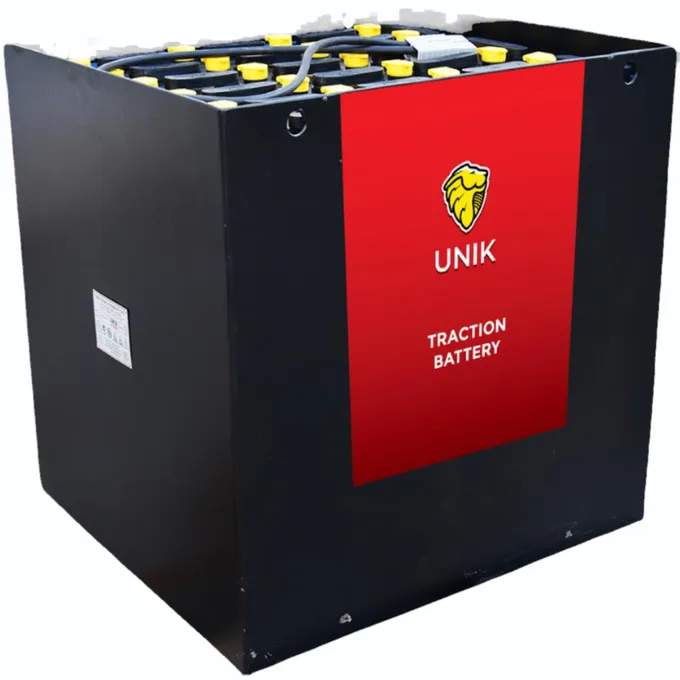
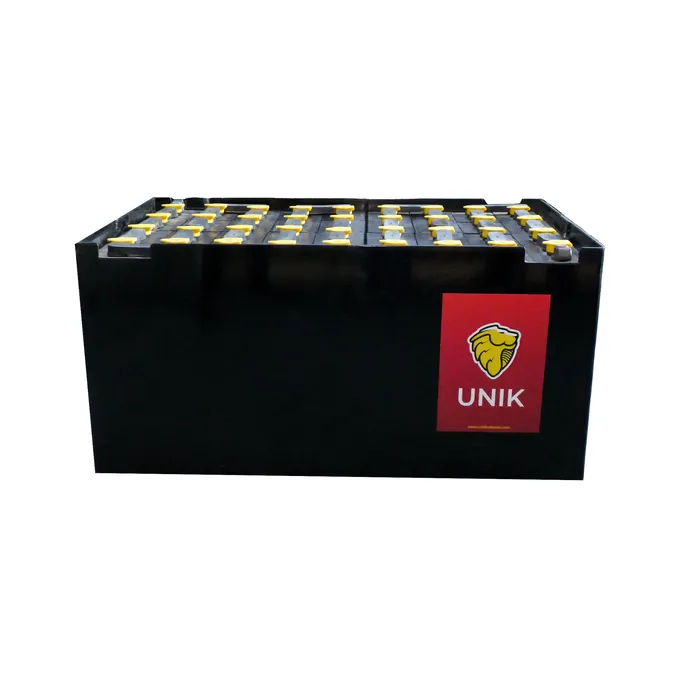
Traction batteries for forklifts, pallet trucks, tow tractors and floor scrubbers, built in DIN and BS cell formats with matched chargers and connectors.
Traction Batteries
INR 35000
offered are designed to provide necessary energy to meet the operational demands of industrial machinery requirements. Made available in a wide capacity and dimension options, these can be made available in DIN and BS st
Industrial Traction Batteries
INR 35000
The batteries made by us are exported on a regular basis to South East Asia, Gulf, Africa, Australia and various other areas around the world.
Rechargeable Traction Batteries
INR 40000
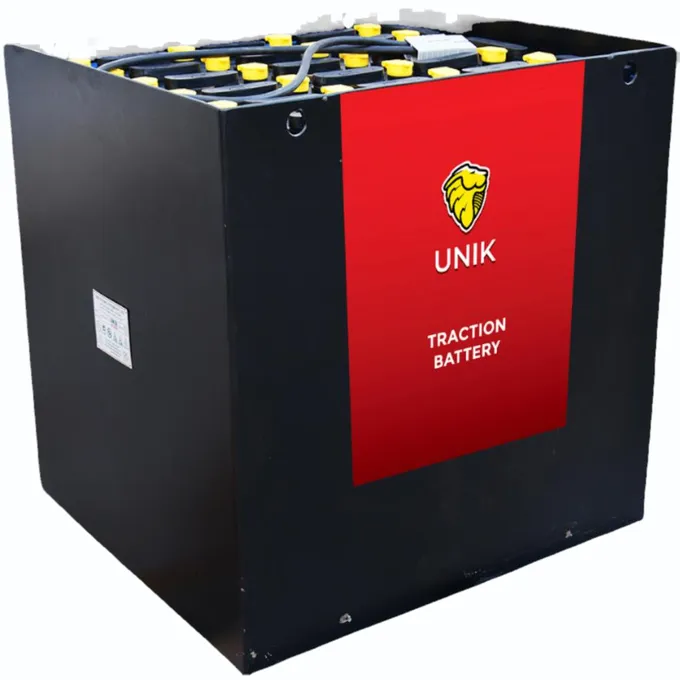
used for propulsion of battery electric vehicles (BEVs). Traction batteries are used in forklifts, electric Golf carts, riding floor scrubbers, electric motorcycles, full-size electric cars, trucks, and vans, and other e
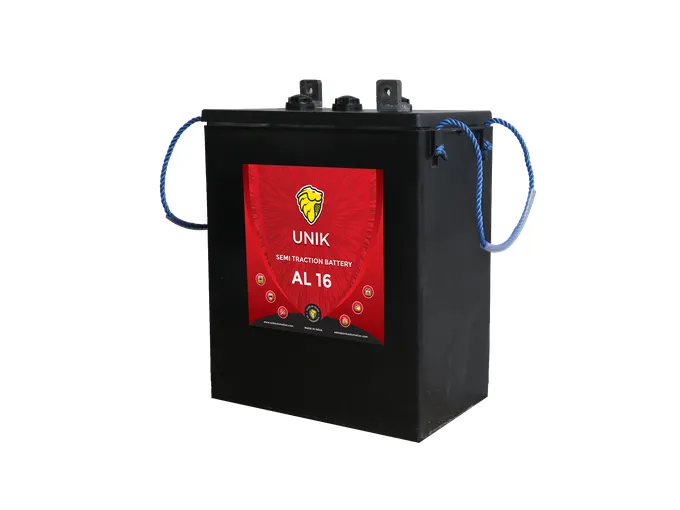
Semi Traction Batteries
INR 7000
Semi Traction Batteries offered are designed to provide customers customized turn-key energy solutions and are developed with strategic partnerships with leading companies. The additional energy storage technology suppor
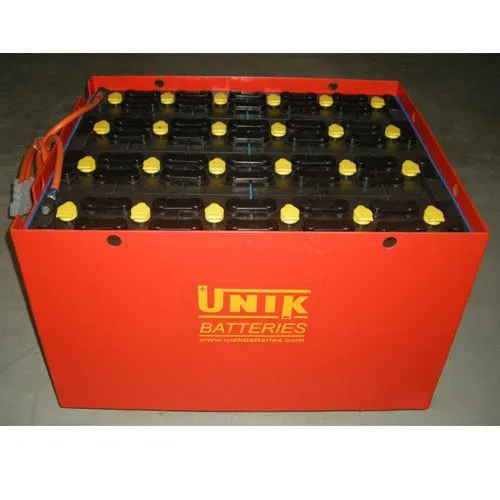
Industrial Batteries
INR 90000
UNIK Industrial Batteries are used in forklifts and pallet trucks as well as large size industrial
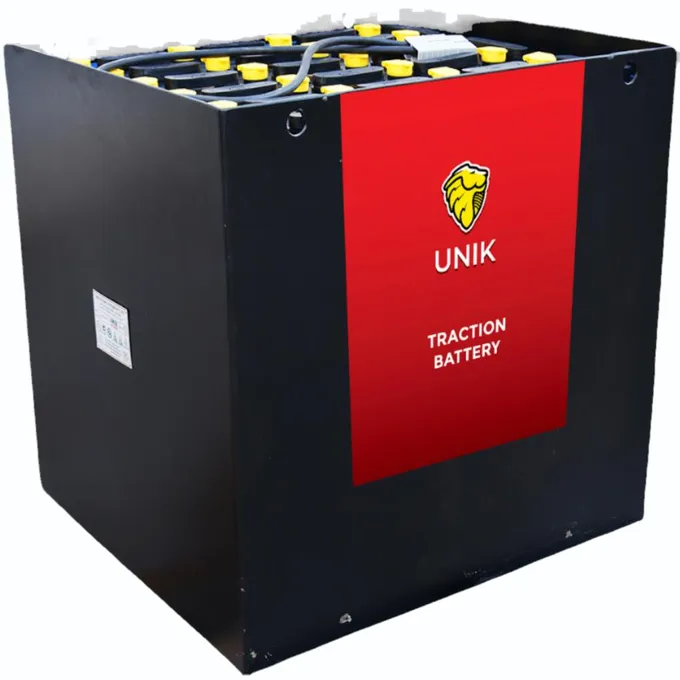
Industrial Forklift Batteries
INR 20000
The UNIK industrial traction batteries are used in forklifts, pallet trucks, platform pallet trucks and boom cranes. The UNIK products are exported to more than 16 countries worldwide and used all over India.
From the same range
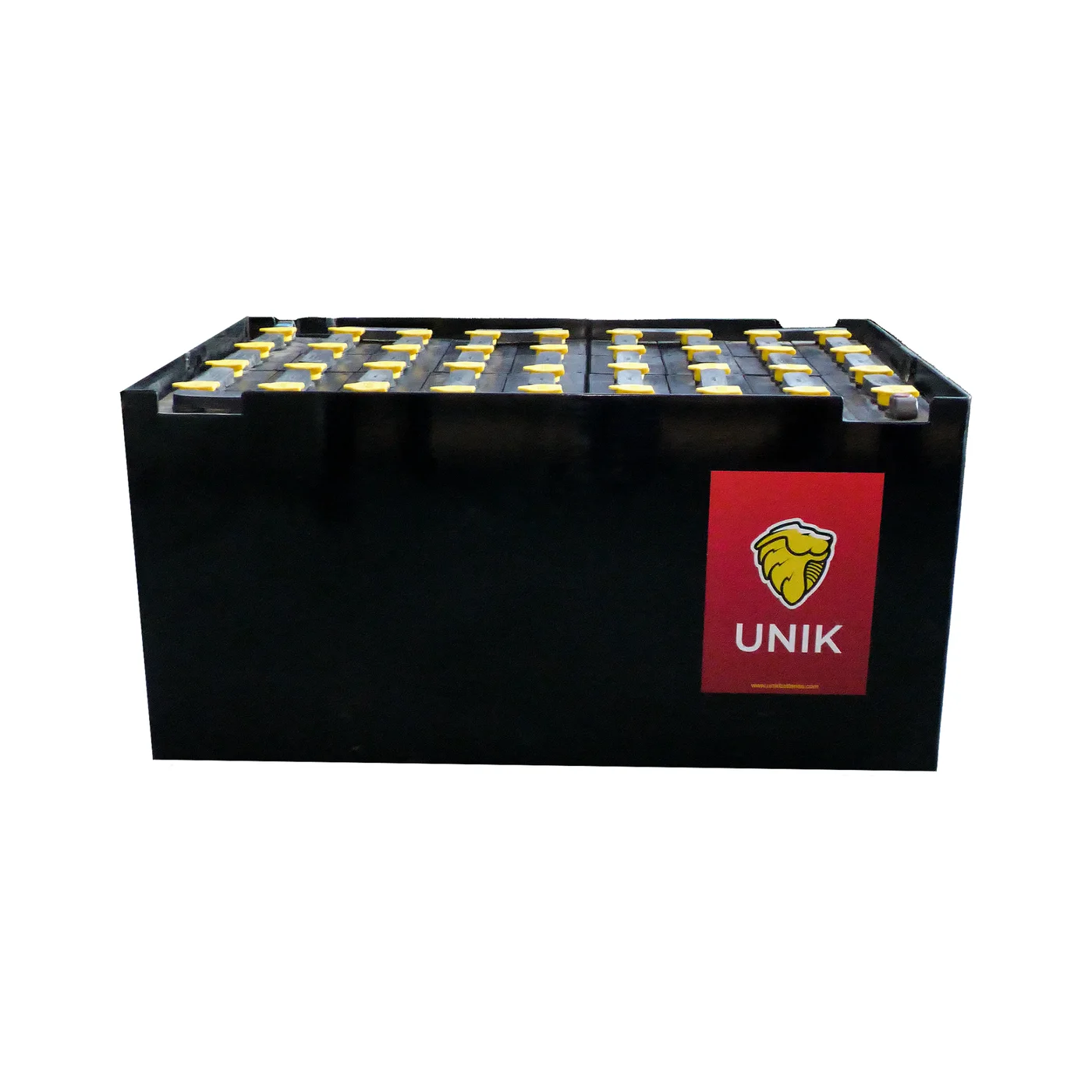
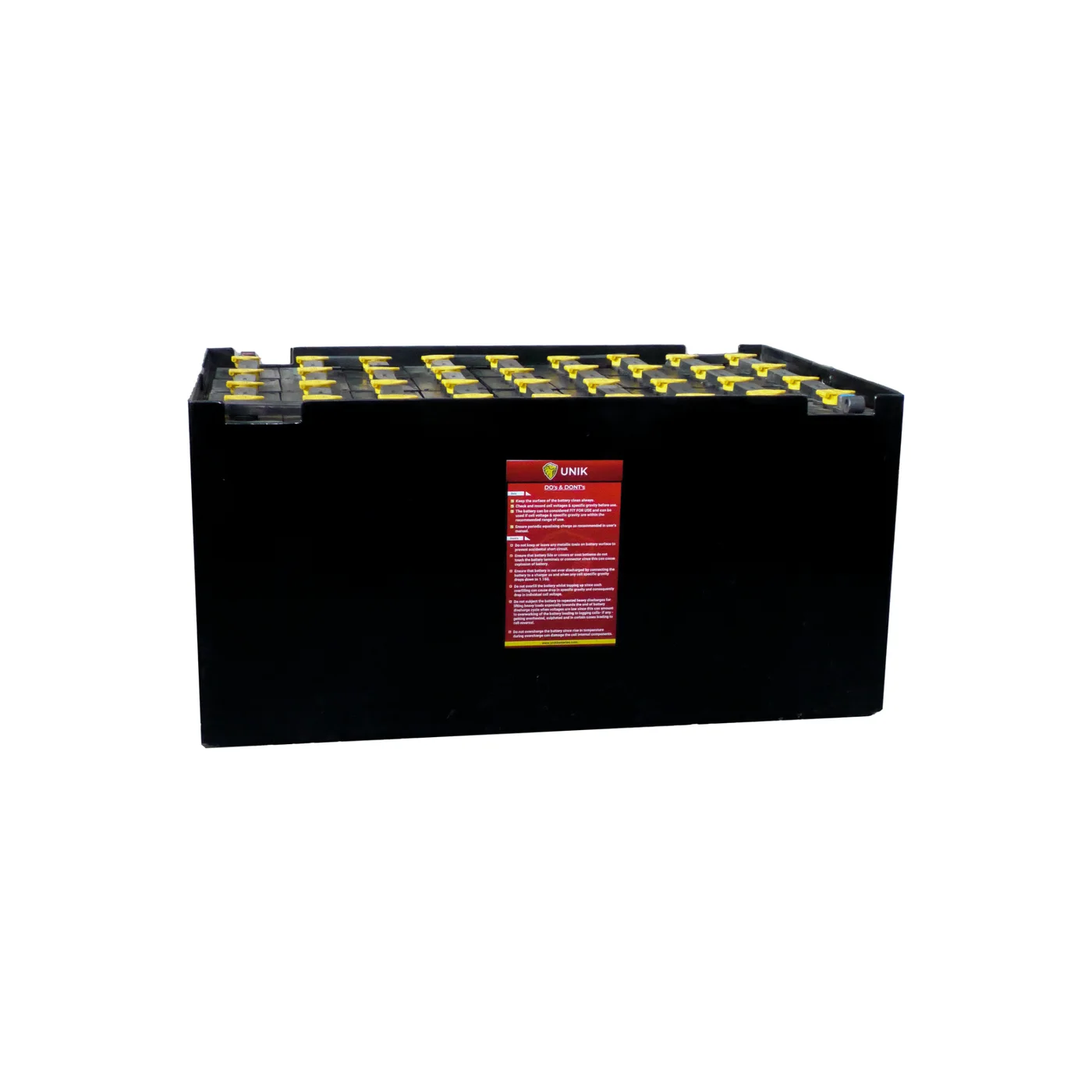
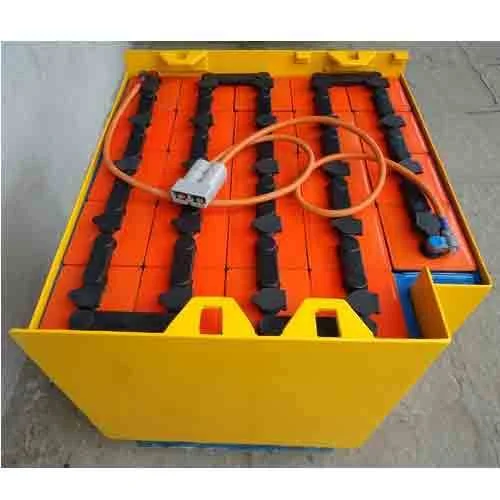
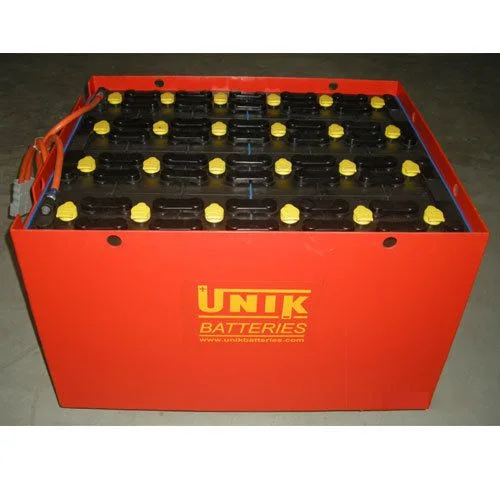
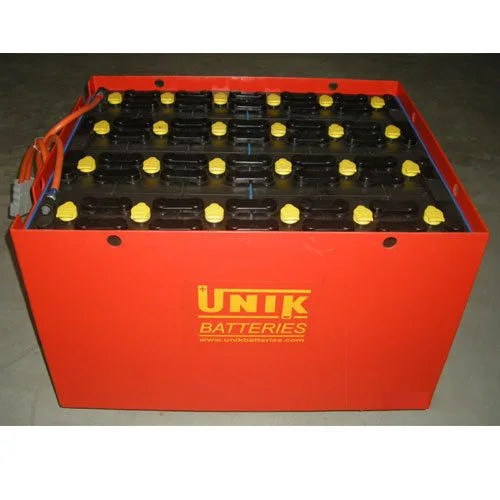
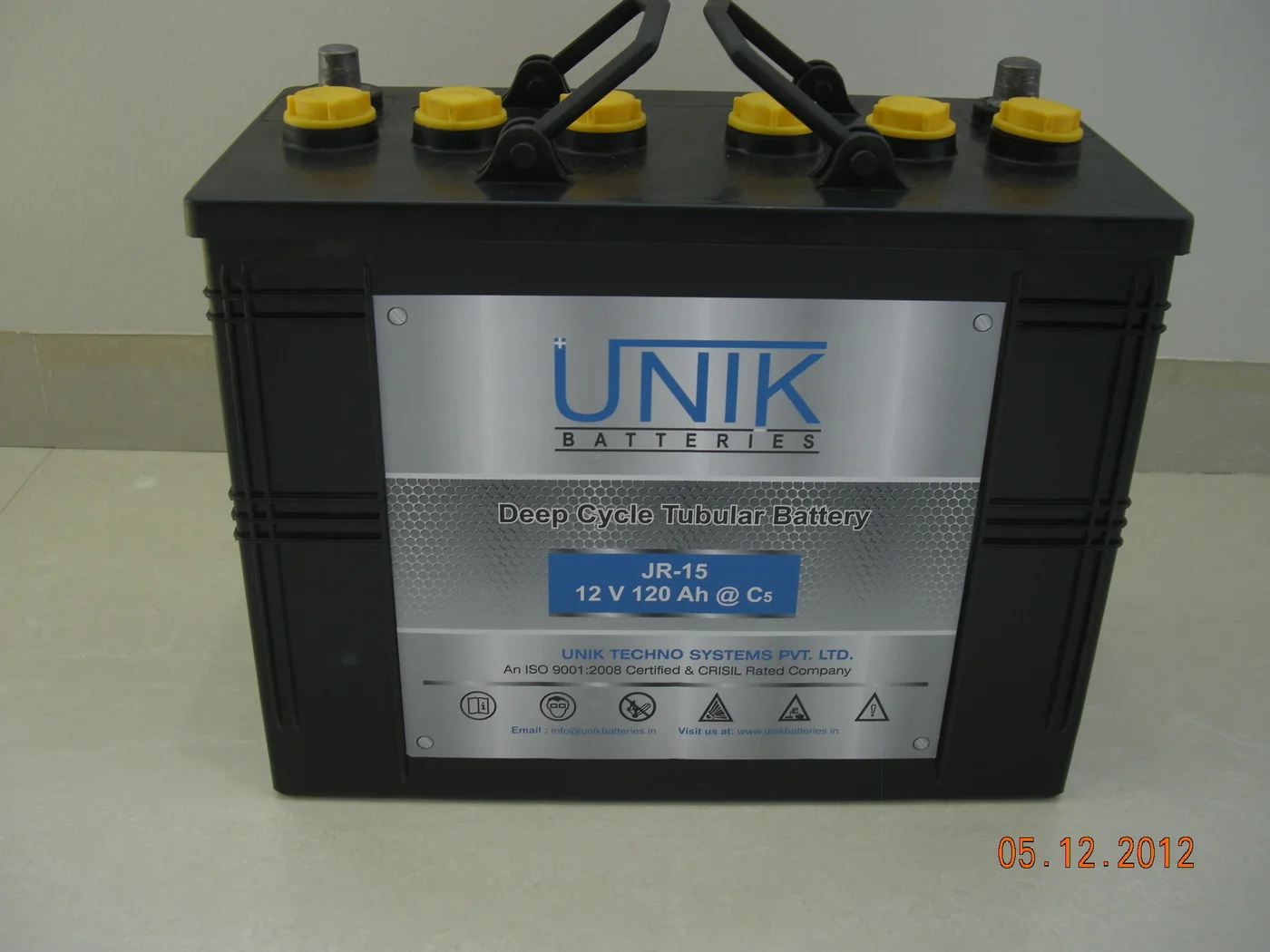
In short: a traction battery is a deep-cycle lead-acid battery sized for repeated discharge over a shift, usually built from 2 V cells in DIN or BS formats and rated by Ah at the 5-hour rate. Unik supplies traction batteries from 100 to about 1,500 Ah, with matched chargers and fleet-sizing support.
What makes a traction battery different
A traction battery is discharged deeply and often — 80 % depth on a single-shift pattern is normal — so the tubular positive plate and the alloy choice matter more than headline capacity. Traction cells are built with tubular positives, glass-fibre or sintered PVC separators, and a low-antimony or hybrid alloy that tolerates cycling without excessive watering.
Capacity is quoted at the 5-hour rate (C5) for traction duty, not the 20-hour rate used for standby batteries. A pack described as 600 Ah at C5 will not deliver 600 Ah over an eight-hour shift — the usable figure depends on the discharge curve, the temperature in the truck and how far you actually run it down.
Formats and capacities
| Format | Plate type | Typical capacity | Typical duty |
|---|---|---|---|
| DIN PzS | Tubular positive, flat negative | 100 – 1,200 Ah (C5) | Forklifts, reach trucks |
| DIN PzB | Tubular, higher cycle life | 200 – 1,500 Ah (C5) | Multi-shift, heavy duty |
| BS traction | Tubular positive | 100 – 800 Ah | Pallet trucks, scrubbers |
| Monobloc | Flat or tubular | 6 V / 12 V, 60 – 260 Ah | Small scrubbers, golf carts |
Sizing to the shift, not the datasheet
Most oversizing and most premature failures come from the same mistake: sizing the battery to the truck rating rather than to the work. Duty cycle, lift height, ramp gradient and ambient temperature all move the real Ah draw. The method we use is written up in sizing a traction battery to a shift pattern, and it is the same method we apply when quoting.
Chargers are matched on curve, not just on voltage: a charger with the wrong finish rate will either undercharge and sulphate the plates or overcharge and dry the cells. Related hardware sits on the forklift battery charger and battery connectors pages.
Questions buyers ask
Frequently asked questions
How do I choose between PzS and PzB cells?
PzS is the standard choice for single-shift forklifts and reach trucks. PzB has a heavier tubular plate and higher cycle life, so it pays back on multi-shift operations or where the battery is deep-discharged every day. Beyond about 1,200 Ah the pack weight and compartment size usually decide it for you.
What capacity do I need for an 8-hour shift?
Start from measured Ah draw per hour, add 20 % margin for ageing and cold, and size to the 5-hour rate — not the 20-hour rate. As a rough check, a 2-tonne counterbalance truck doing mixed duty usually lands between 400 and 600 Ah at C5.
How long do traction batteries last?
1,200–1,500 cycles for standard PzS in good maintenance, more for PzB. Watering discipline, charger curve and depth of discharge decide most of that life; a battery kept above 20 % state of charge and watered on schedule routinely outlasts its warranty.
Still unresolved? Send the plate drawing or the load profile and we will answer with numbers rather than a brochure. Request a quotation →
Next step
Tell us the cells you need to build,
and the plant you need to run them.
Send your capacity target, cell format and the operations you want to bring in-house. We will come back with a machine list, a layout and an indicative timeline.
What helps us quote fast
- Cell format and dimensions (cylindrical, pouch, prismatic, tubular)
- Target throughput per shift, and annual volume
- Which steps you already run, and which are new
- Shop-floor power supply and available footprint
- Destination port and required commissioning window