Company
Industrial Batteries
Industrial batteries across four duty classes — traction, standby, telecom and solar — built as flooded tubular cells, VRLA monoblocs and DIN traction packs.
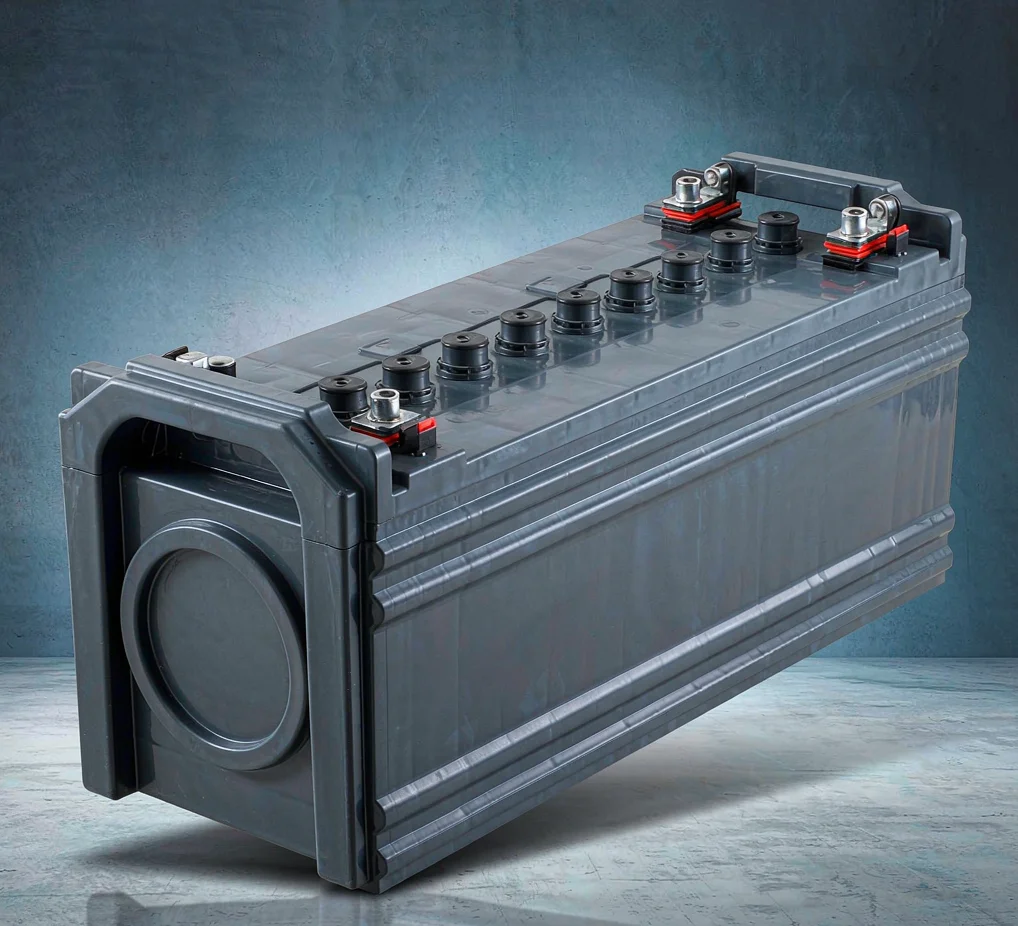
In short: industrial batteries covers every lead-acid battery that runs equipment rather than a vehicle engine: traction packs for forklifts, stationary cells for switchyards and telecom, VRLA monoblocs for UPS, and tubular batteries for solar. Unik manufactures all four families and sizes them against the duty cycle rather than the label.
The four families
| Family | Construction | Duty | Typical life |
|---|---|---|---|
| Traction | Tubular positive, DIN / BS cells | Deep cycle, daily | 4 – 6 years |
| Stationary | Flooded tubular, 2 V cells | Float, occasional discharge | 10 – 15 years |
| UPS / VRLA | AGM or gel monoblocs | Float, short high-rate discharge | 3 – 5 years |
| Solar / deep cycle | Tubular positive, flooded | Daily partial cycle | 5 – 7 years |
Flooded or VRLA
Flooded cells last longer and cost less per Ah, but need watering, ventilation and a battery room. VRLA needs neither, which is why it dominates UPS rooms and remote telecom sites — at the cost of life in high ambient temperature. Above about 30 °C, VRLA life falls sharply and a flooded cell in a ventilated room often works out cheaper over ten years.
How to specify
Three inputs decide the battery: the load profile (continuous, or a short high-rate discharge), the required autonomy in minutes or hours, and the ambient temperature in the battery room. Everything else — plate type, container, connector — follows from those. If the load is a forklift fleet, start with the fleet sizing method rather than the datasheet.
Questions buyers ask
Frequently asked questions
What is the difference between industrial and automotive batteries?
An automotive battery is built for a short, high-current burst and is kept near full charge. An industrial battery is built for sustained discharge — deep cycling in traction, or long float in standby — using thicker plates and different alloys. Using an automotive battery in industrial duty typically halves its life.
How do I size a stationary battery for a switchyard?
Start from the DC load profile and the autonomy required by your transmission utility standard, then apply the end-of-discharge voltage and temperature correction. Stationary cells are rated at C10; the same cell used for a 1-hour duty will only deliver a fraction of that rating.
Can you supply batteries with the machines?
Yes. Plants we build are usually commissioned with our own batteries and connectors, which means the machine settings are validated on the battery they will actually produce.
Still unresolved? Send the plate drawing or the load profile and we will answer with numbers rather than a brochure. Request a quotation →
Next step
Tell us the cells you need to build,
and the plant you need to run them.
Send your capacity target, cell format and the operations you want to bring in-house. We will come back with a machine list, a layout and an indicative timeline.
What helps us quote fast
- Cell format and dimensions (cylindrical, pouch, prismatic, tubular)
- Target throughput per shift, and annual volume
- Which steps you already run, and which are new
- Shop-floor power supply and available footprint
- Destination port and required commissioning window