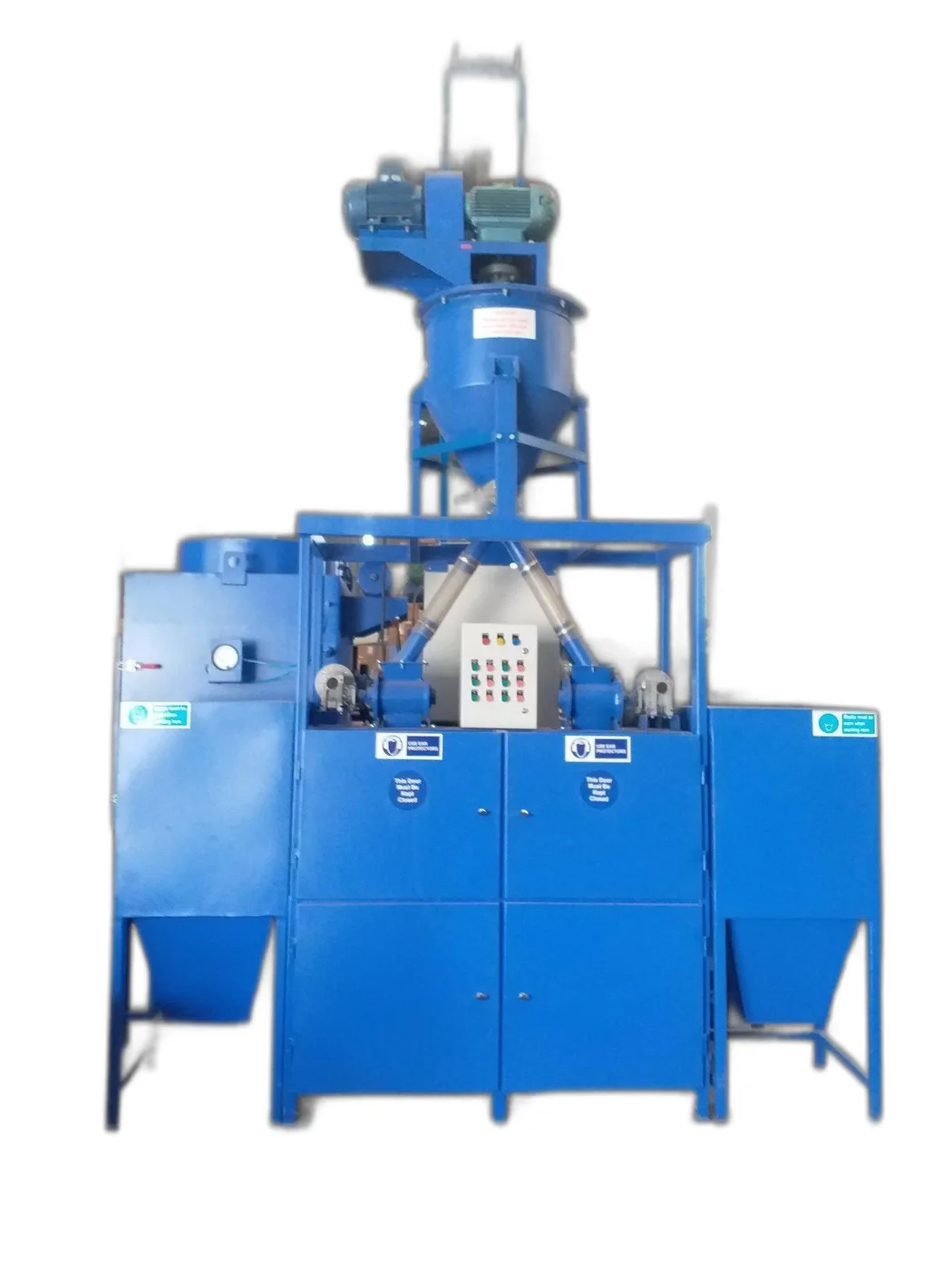
When filled-plate weights start spreading, the first response in most plants is a conversation with the shift. That is rarely where the answer is. Filling is a volumetric operation, and volumetric operations drift for mechanical reasons.
1. Powder flow, not powder weight
Lead oxide flows differently depending on its apparent density and moisture content. A lot that is 2% denser will fill the same volume with 2% more material. If you are controlling weight by volume and the incoming oxide is not controlled, you are controlling the wrong end of the process.
Ask for apparent density on the incoming certificate, and check it yourself with a volumeter if you do not get one. It is a two-minute test that saves a week of scrap.
2. Hopper level
Most filling machines feed more consistently at a stable hopper level. A hopper that swings from full to nearly empty changes the compaction at the pickup point, and therefore the fill. Keep the level within a band and top up in small increments rather than in one large charge.
3. Vibration and settling
The fill is only as good as the settling after it. If the plate is not settled consistently — same amplitude, same duration, same position on the table — the weight will vary even when the volume is right. Check the mounting pads; a compressed pad transmits less energy and the plate settles less.
4. Plate and grid variation
A grid that is 3% thicker takes 3% less paste to reach the same overall thickness. If grid thickness varies between lots, the filling machine is being asked to compensate for an upstream variable. Measure incoming grid thickness and adjust the recipe per lot rather than per plate.
If your weight variation follows the grid lot, the filling machine is fine. The problem is upstream and the filling machine is just where you can see it.
5. Wear on the metering element
Metering plates, shoes and scoops wear. Wear is gradual, so the drift is gradual, so nobody notices until the weights are outside tolerance. A monthly check against a reference gauge takes ten minutes and catches the trend before it becomes scrap.
The measurement discipline that makes it work
Weigh at the same point in the process every time, on the same scale, with the same procedure. A weight taken off the belt is not comparable to a weight taken after curing. Pick one point, one scale, and record it on a chart the shift can see.
Visible data changes behaviour faster than any amount of retraining.